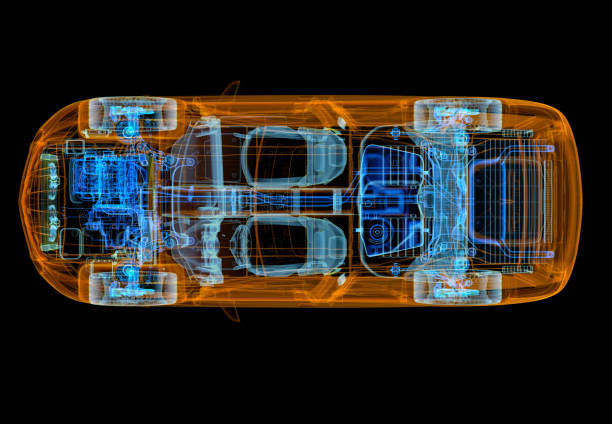
In an age marked by heightened security concerns, the use of advanced technology in vehicle inspection has become paramount. Among the various inspection technologies, backscatter X-ray scanners have emerged as a crucial tool in ensuring safety and security across various domains. These sophisticated devices are designed to offer a non-intrusive method of scanning vehicles, making them invaluable in border security, customs inspections, and critical infrastructure protection. By providing a detailed view of a vehicle’s contents without the need for manual searches, backscatter X-ray scanners streamline the inspection process and enhance the detection of illicit items.
The Technology Behind Backscatter X-Ray Scanners
The backscatter x-ray scanner technology operates on the principle of scattering X-rays when they encounter different materials. Unlike traditional transmission X-ray systems that rely on the absorption of X-rays, backscatter scanners detect the radiation that bounces back from the scanned object. This capability allows for the visualization of organic materials, such as explosives and drugs, which are often difficult to detect with conventional methods.
Key Features
- Non-intrusive scanning: Allows for inspection without the need to unload or manually search vehicles.
- High-resolution imaging: Provides detailed images for accurate identification of hidden items.
- Efficient processing: Enables rapid scanning of large numbers of vehicles, reducing congestion at inspection points.
Applications of Backscatter X-Ray Scanners
Border and Customs Inspections
Backscatter vehicle scanners play a vital role in border crossing x ray machines, where they help identify contraband, unauthorized goods, and other security threats. By quickly scanning vehicles crossing international borders, they ensure that security measures do not impede the flow of legitimate trade and travel.
Critical Infrastructure Protection
In the realm of infrastructure protection, these scanners are deployed to secure facilities such as airports, seaports, and government buildings. The ability of backscatter x ray vehicle scanner systems to detect threats in vehicles approaching sensitive areas is critical in preempting potential security breaches.
Commercial and Industrial Applications
Beyond security, backscatter scanners are increasingly being used in commercial settings for quality control and inventory management. The cargo x ray scanner applications allow businesses to verify shipment contents without opening containers, enhancing efficiency and reducing losses.
Advantages of Backscatter X-Ray Scanning
The deployment of backscatter car scanner technology in vehicle inspection offers several advantages over traditional methods:
- Enhanced Detection: Capable of detecting a wide range of materials, including organic substances that are typically hard to identify.
- Increased Throughput: Reduces waiting times at inspection points by rapidly processing vehicles.
- Safety: Minimizes the need for physical searches, reducing the risk of injury to inspection personnel.
Challenges and Considerations
While backscatter truck scanner technology offers significant benefits, it is not without challenges. Addressing privacy concerns is paramount, as the detailed images produced by these scanners can be sensitive. Moreover, the cost of implementation and maintenance must be considered by organizations opting to utilize this technology.
Overcoming Barriers
- Privacy Protocols: Implementing strict data handling practices to protect the privacy of individuals.
- Cost Management: Leveraging scalable solutions to ensure cost-effectiveness in deployment.
- Regulatory Compliance: Adhering to national and international standards for radiation safety and operational protocols.
Conclusion
In summary, the adoption of vehicle x-ray scanner technology represents a significant advancement in the field of vehicle inspection. Its ability to provide detailed insights into vehicle contents without the need for invasive procedures is invaluable across various sectors. As technology evolves, the continued development and refinement of backscatter X-ray systems will play a pivotal role in enhancing security measures worldwide.